Honoring the Legacy of
Kaua'i's Last King

The island that captures the sun, Kaua‘i of Manokalanipō
‘Ahahui Kaumuali‘i, 1924
Sailing Vessels in Pre & Early Contact Hawaii
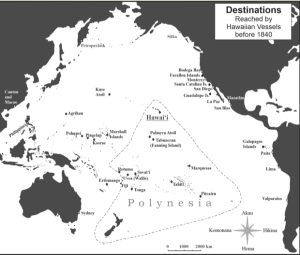
Hawaiians and other Polyneisians had travelled around the Pacific for centuries. Wayfinding used celestial navigation, and awarenss of ocean and wind currents, migratory birds and attunement with othernatural phenomena to follow their course. In the 1970’s the Hokuleʻa was built and sailed to prove this, comtinuing to travel worldwide to this day.
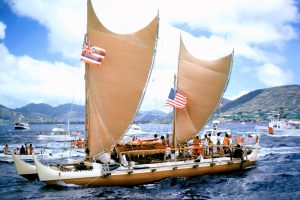
Hokuleʻa arriving in Honolulu from Tahiti
Hawaiians Considered Drift Logs Gifts from the Gods.
That Hawaiians used drift logs from Oregon to make canoes has been reported in several sources. For example, Menzies, a surgeon and naturalist accompanying Captain George Vancouver, described “the largest single canoe we had seen amongst these islands, being about sixty feet long and made of one piece of the trunk of a pine tree,(spruce) which had drifted on shore on the east end of the island of Kaua’i a few years back. She had sixteen men on her and was loaded on the outriggers with a large quantity of cloth, spears, two muskets, and other articles, which they were carrying up to Maui to Kaeo” (Tommy Holmes, The Hawaiian Canoe 24).
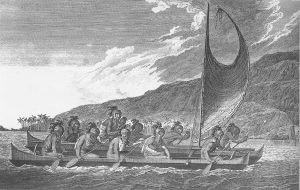
Royals: Kamehameha, Kaumualiʻi and Liholiho Buying, Building and Operating Ships
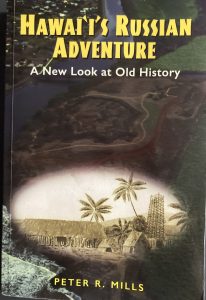
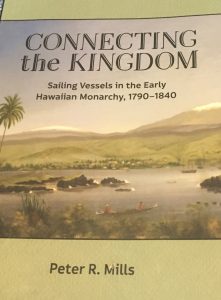
Dr. Peter Mills’ 30 years of research started with archaeology in 1994, of the now correctly named Pa-ʻulaʻula Historic Site, followed by two books. Hawaiʻi’s Russian Adventure was published in 2002.
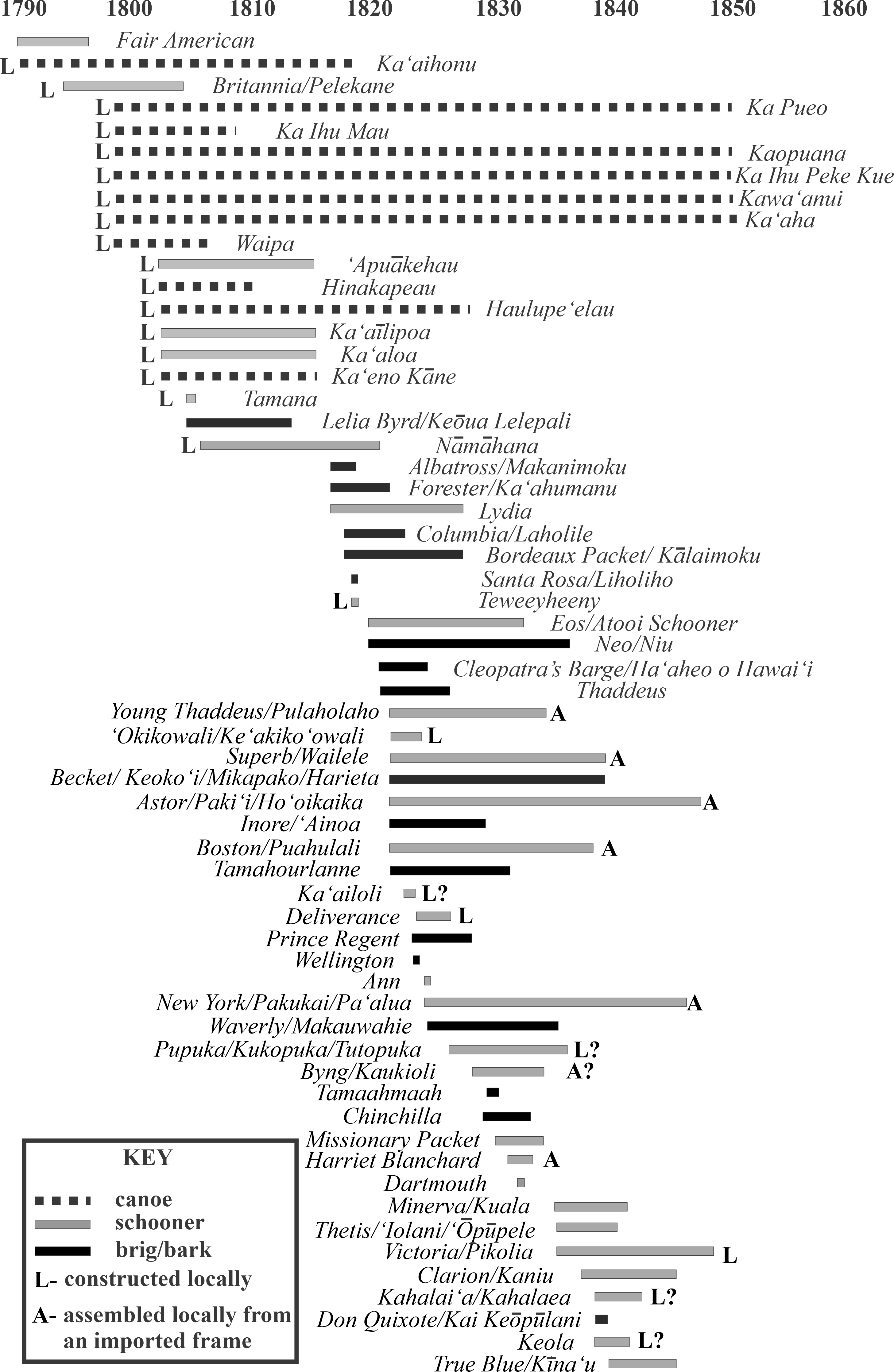
Recently published in 2023: Connecting the Kingdom; Sailing Vessels in the Early Hawaiian Monarchy, 1790-1840 extends the depth and breadth life viewed as monarchs actively engaged in sailing for trade and transportation. In Part 1, you will find engaging research on “large things forgotten” and the “pragmatics of grandeur”. Part II “follows the fleet” with logs of over 50 ships owned, operated and sometimes built first by Kamehameha and Kaumualiʻi. Later, after the deaths of both monarchs, the privilege to purchase vessels was extended to lesser chiefs as they engaged in the then current trade of selling sandalwood and buying must have luxury goods from around the world.
Shipping Industry at Paʻulaʻula Kauhale
For a more detailed view see under Video Presentations: https://youtu.be/UpT8qLrmMug?si=xVnYr-EwtTCcsnKV
Background: Mills’ Connecting the Kingdom
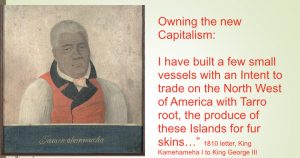
1810-Kamehameha Letter to King George
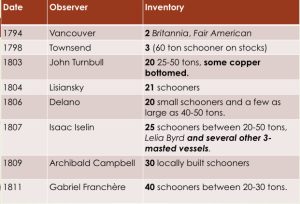
Hawaiian Ship Count 1794-1811
Types of Sailing Vessels
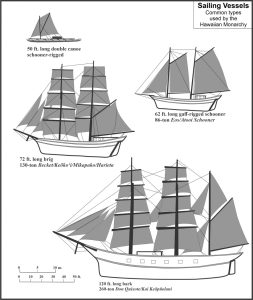
Named schooners, peleleu canoes, and brigs/barks used by the chiefs 1790-1840
Note: p6.35; followed in book by ships logs
SUMMER 1821: ROYAL VISITS to KAUMUALIʻI at PAʻULAʻULA
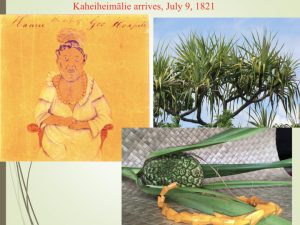
Kaheiheimalie, also known as Kalakua, one of Kamehamehaʻs widows: and sister of then Kuʻina Regent, Kaʻahumanu arrived unexpectedly to Paʻulaʻula on July 9, 2022. King Kaumualiʻi welcomed her warmly, providing his own residence for her stay, and lavishing her with royal hospitality. They spent days at the beach conversing, surfing, and making hala lei as a tribute to Kamehameha who had passed. One wonders if the making of hala lei, which marks momentous transitions other than death, was hoʻailona/fore-shadowing of changes to come.
An Impulsive Voyage and Visit
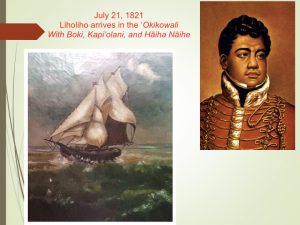
Sailing across the Kaʻieʻie Waho Channel with a group of about 30 royals and his men, in an open vessel, at night in rough waters… was it drunken madness or strategic planning?
Nevertheless, upon arrival Kaumualiʻi greeted Liholiho warmly; and Liholiho and his group displayed a “cheerful and peaceful friendliness”. At a meeting with his chiefs present, Kaumualiʻi acknowledged Liholiho as his “…rightful successor and heir to his appointment as King.” As Tributary King he offered to relinquish all of Kauaʻi to him, including weapons and vessels.
Bingham describes Liholihoʻs response as having a “mild and manly aspect.”I did not come to take away your island. I do not wish to place anyone over it. Keep your island, and take care of it as you have done before, and do what you please with your vessels.” Though they had never met previously, there had been rumors of (perceived?) jealousies between the two Kings, now seemingly put to rest.
This kalai ʻaina was a typical protocol of honor and prestige for the King of higher rank, customarily would then return the care and responsibility of land back again to lesser rank chief, as is usually done w konohiki of a certain area. Kame’eleihiwa in Native Lands and Foreign Desires, describes that Liholiho continued Kaumualiʻi as Tributary King of Kauaʻi, as originally executed in the 1810 Treaty by his father. Kame’leihiwa, however, explains that this mutual honoring was a rarity for Liholiho since he had little land in his control, due in part to Ka’ahumau strong control as Ku’ina Regent.
For the next 42 days, Kaumualiʻi hosted a growing royal entourage traveling around the island, and in each place he introduced Liholiho as the High King of all the islands. A scherade or an elaborate plan between two Hawaiian Kings?
A Timeline of Events Leading to Kaumualiʻi`s Departure
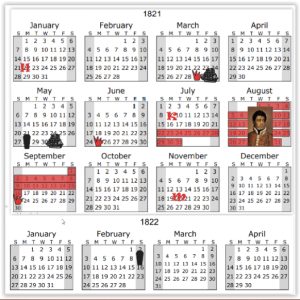
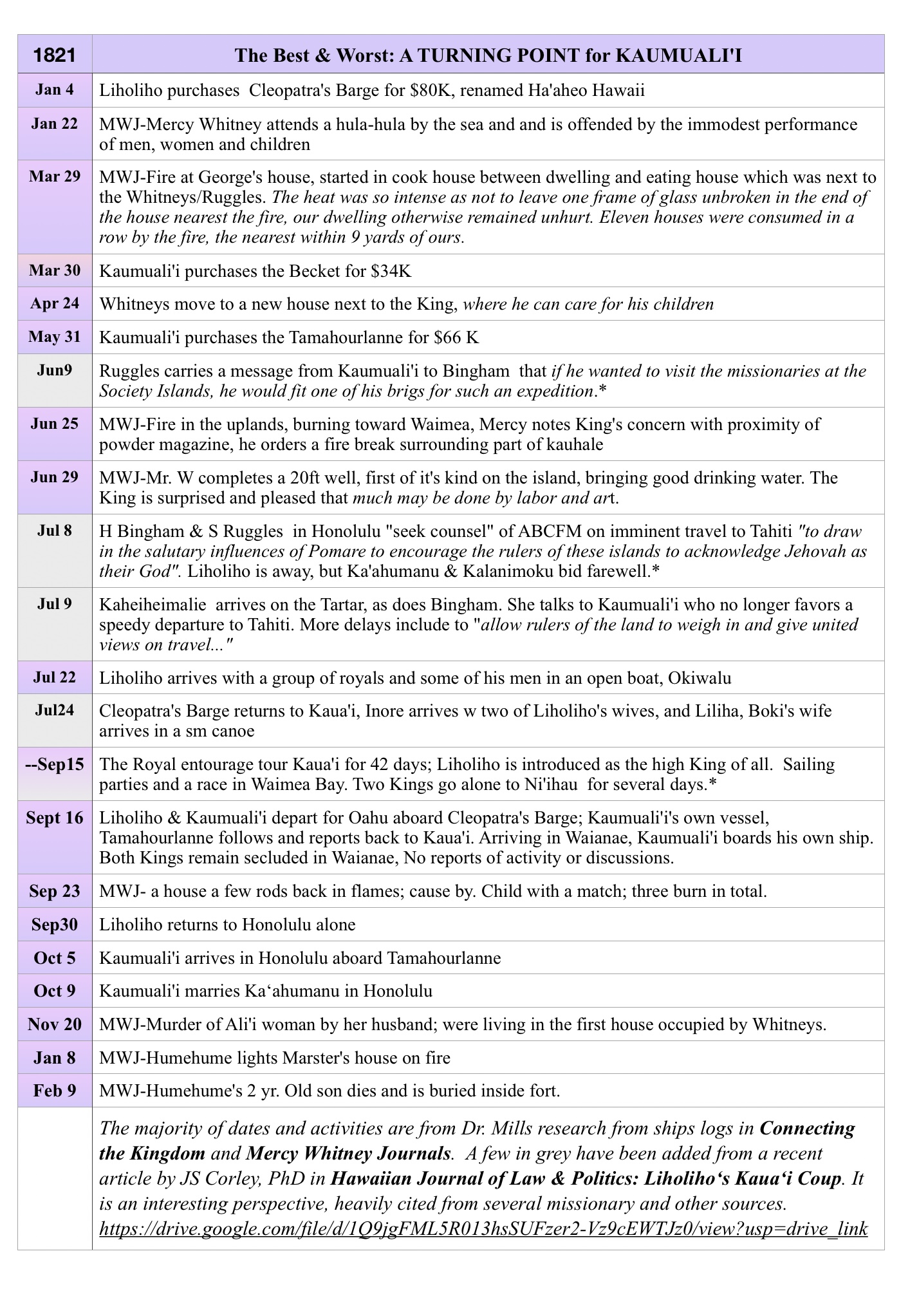
NOT Kidnapped- but Gone from his Beloved Island and People
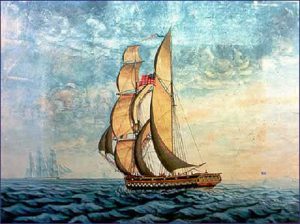
There are a few other details, perspectives and motives that complicate the story Kaumualiʻi leaving Kauaʻi. Missionaries led by Bingham encourage a willing Kaumualiʻi to take a group of them to Tahiti, (with the underlying motive of learning a faster way to christianize more heathens and eradicate theirr sinful ways); while hoping to slight Liholiho for his lackluster support of their mission and creating some jealous competition between the two Kings: and not really caring if they offended the US Counsel, who is concerned over competition in trade, not to mention already being at odds with the pious missionaries contempt for liquor. To find out more regarding these strange details leading up to Kaumualiʻi leaving Kauaʻi, read: Liholiho”s Kauaʻi Coup, J Susan Corley, PhD-UH-Manoa: https://drive.google.com/file/d/1Q9jgFML5R013hsSUFzer2-Vz9cEWTJz0/view?usp=drivesd

*Click to read the article


‘AHAHUI KAUMUALI‘I
P.O. Box 509 Waimea, Kauaʻi, HI 96796
kumukeao@gmail.com