Honoring the Legacy of
Kaua'i's Last King

The island that captures the sun, Kaua‘i of Manokalanipō
‘Ahahui Kaumuali‘i, 1924
The Hawaiian Kingdom decommissined Papu Paulaula in 1862-64; no longer having the concern of invasion foreign or domestic.
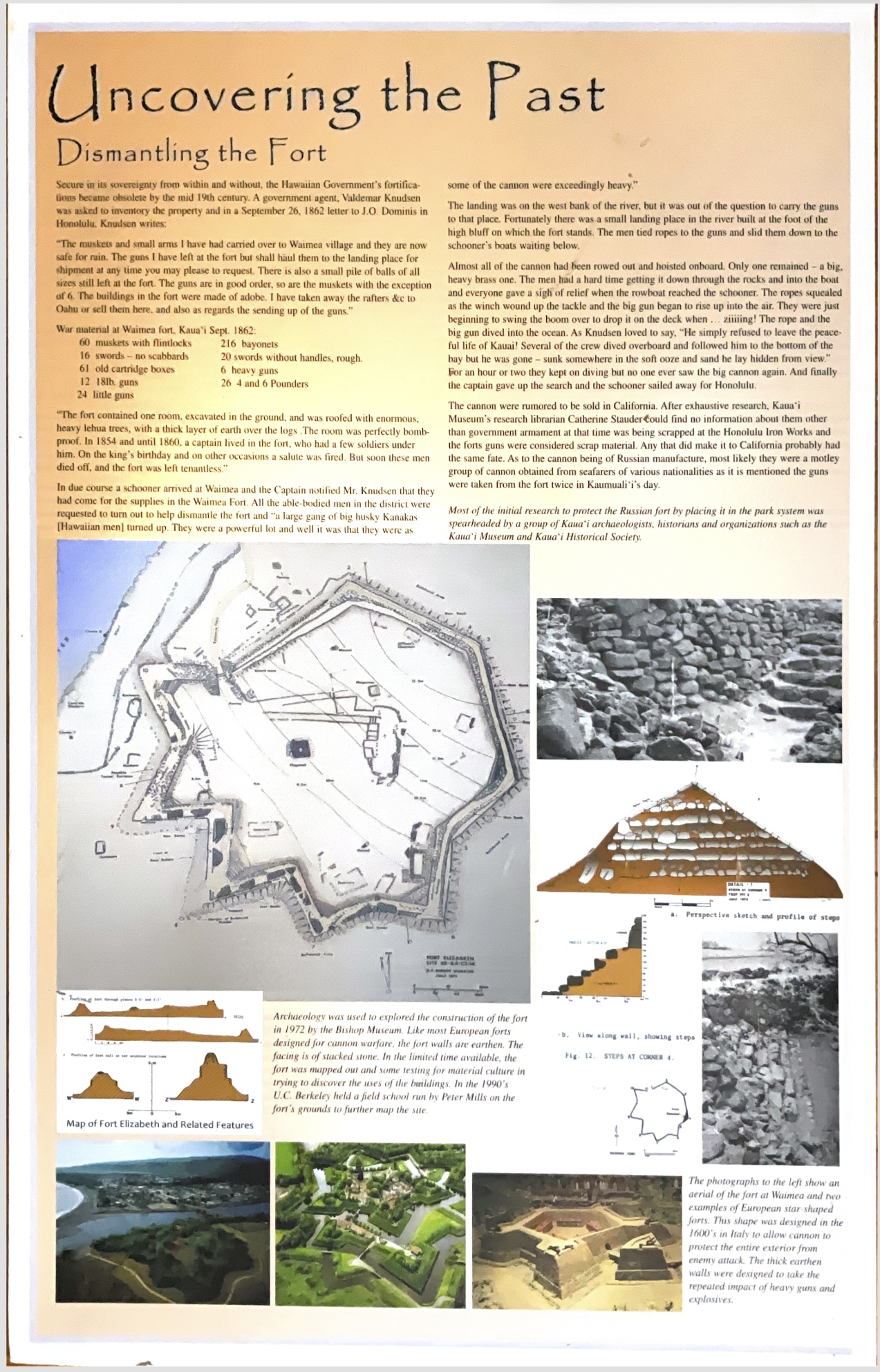
In 1993-94 Dr. Peter Mills, then a UC Berkley grad student lead an archaelogical survey, with help from Pila Kikuchi and a KCC student group. This began a 30 yr mission to prove the fort was never built, ruled or occupied as a Russian settlement. There is absolutely no evidence of that, or that any Russian ever spent a night there. Hawaiian built, owned & operated.
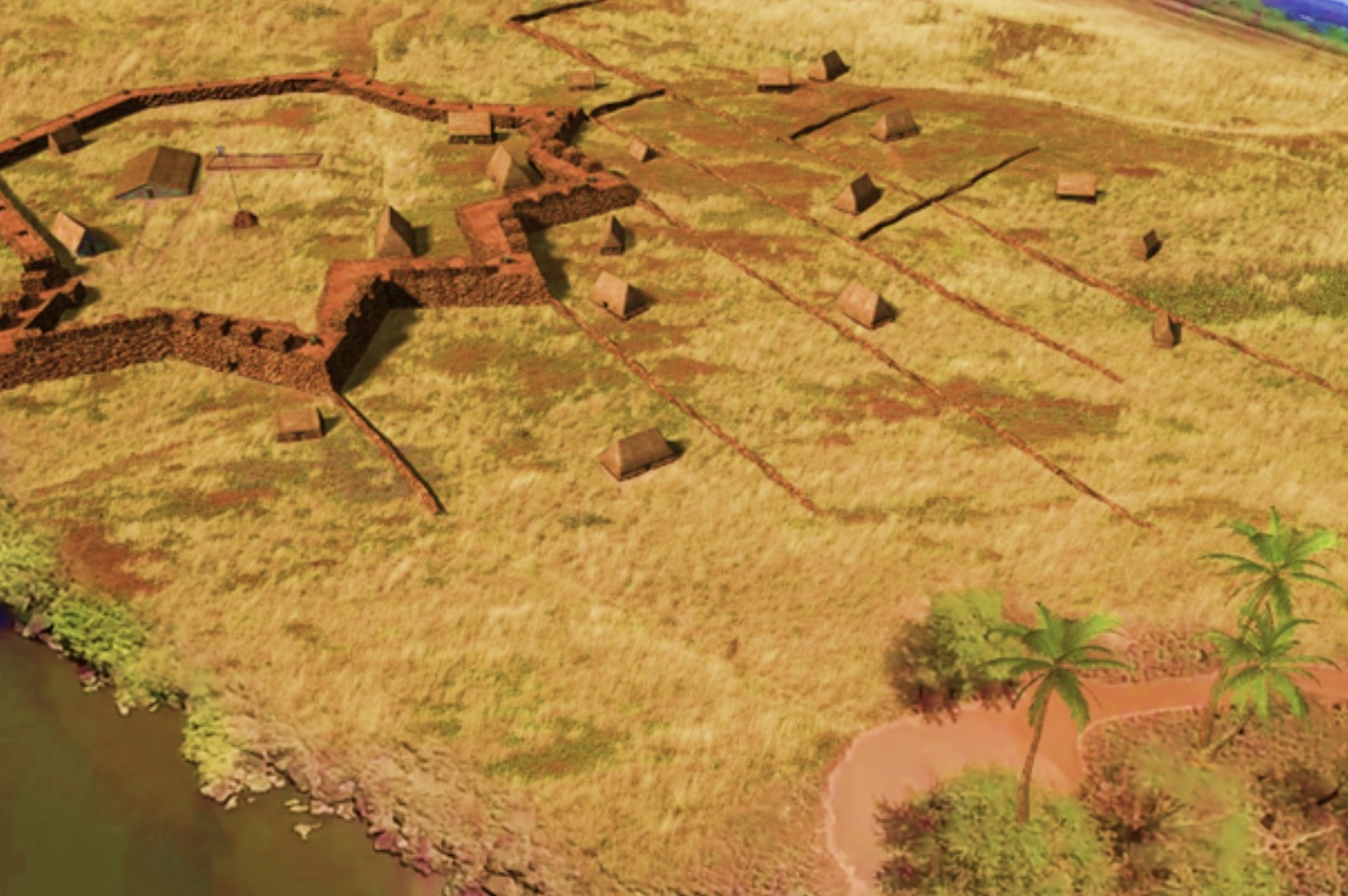
An enhanced graphic of the fort shows kuleana land divisions from 1848 Mahele documents. Fort Commander Paʻele give testimony with the official name: Kaumualiiʻs Papu Paʻulaʻula, also naming several soldiers with Kuleana land plots outside the perimeter.
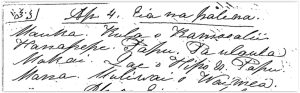
Despite the recorded proof from land documents during the Great Mahele, Jacksonʻs labeling with a foreign moniker, Russian Fort Elisabeth, persisted, though it was originally only used by George Schaeffer in a vain attempt to curry favor with Tzar Alexander.
1875-George Jackson-First Survey
More Fancy Than Fact
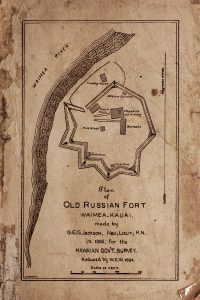
George Jackson created the first official survey of the Hawaiian Fort. Apparently not feeling the need to check any previous records; such as Great Mahele 1848 or DeCommission documents; OR speak to any local Waimea residents who might know of, worked or lived at the site; George sat down drew his map and thought he recalled a story of the Russians building a fort here. That presumptive, and erroneous official name which was repeated over time, giving the site a new foreign life it never had until the end of the last century, when more serious research began to assert other evidence which did not align with the russian fairy tale.
The foreign name was continuously used in later state documents, surveys and local historic references. In 2017, Russian-Americans replanted the RAC flag onsite and began concerted efforts with State officials, advocating to keep the name to honor the russian culture of Hawaii–UNTIL-one of the group was group was federally indited for attempting to bribe State & County officials, with phone record evidence linked directly to Putinʻs private contact. In summer 2022 State and County officials unanimously voted to use only the original, true Hawaiian place name-correcting history in real time to a community that had been disenfranchised from its ow true ancestry. ‘Ahahui Kaumuali‘i considers itʻs mission to help ReConnect those lost ties.
MidSummer 2022
A new old name officially posted
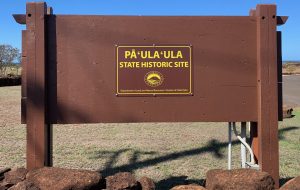
A bigger, better permanent signed is planned with other Park improvements.

*Click to read the article


‘AHAHUI KAUMUALI‘I
P.O. Box 509 Waimea, Kauaʻi, HI 96796
kumukeao@gmail.com